

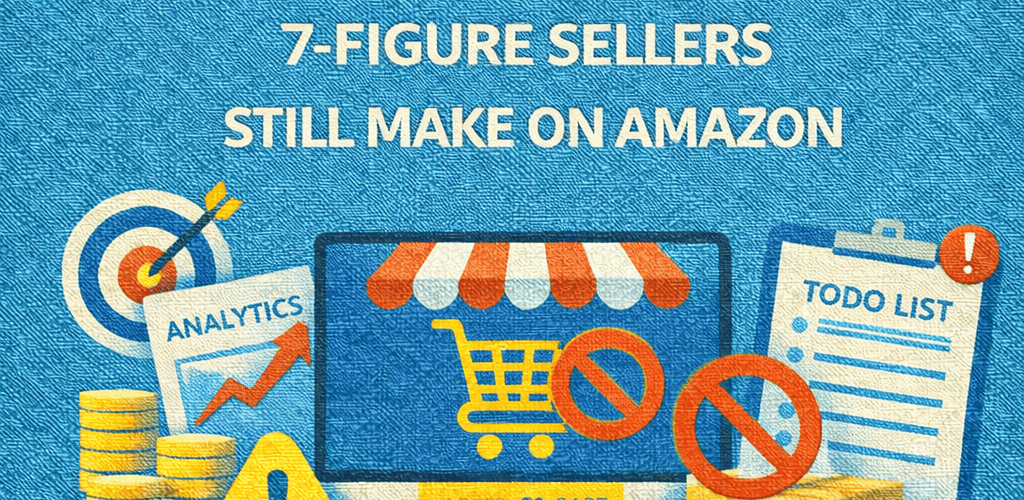
Reaching seven figures on Amazon is a massive achievement. It means you have already beaten most of the competition, validated your product-market fit, built reliable supply chains, and learned how to generate consistent traffic and sales. However, many sellers believe that once they cross the million-dollar mark, the hard part is over. In reality, this is where a new set of problems begins. At scale, small mistakes become extremely expensive, and one wrong decision can affect cash flow, rankings, or even the survival of the brand.
Below are the most common mistakes that even experienced, high-revenue sellers continue to make and why fixing them is essential for long-term growth and stability.
1. Building the Business Around One Hero Product
Many seven-figure sellers reach their revenue milestone because one product performs exceptionally well. It ranks for top keywords, generates strong organic sales, and becomes the main driver of cash flow. Over time, the entire business starts revolving around this single ASIN. While this feels efficient, it is also extremely risky.
Amazon is a platform where control is limited. A listing can be taken down due to a false intellectual property complaint, a policy update, a competitor attack, or even an algorithm change. Reviews can be manipulated, the Buy Box can be lost, or the category can suddenly become restricted. When most of your revenue depends on one product, any disruption can cause a dramatic drop in sales overnight.
Long-term brands think in terms of ecosystems, not single winners. They expand into variations, bundles, accessories, and related niches. They ensure that no single SKU contributes an overwhelming percentage of total revenue. This diversification protects the business from shocks and creates more stability in both rankings and cash flow.
2. Driving More Traffic but Neglecting Conversion Optimization
Advanced sellers usually become very good at generating traffic through PPC, deals, and external promotions. The problem is that many stop optimizing their listings once they start ranking. Over time, competitors improve their visual presentation, add high-quality lifestyle images, refine their copy, and communicate benefits more clearly.
Amazon is highly visual and mobile-driven. If your main image is not eye-catching, your infographics are outdated, or your A+ content does not clearly explain why your product is better, your conversion rate will slowly decline. At seven-figure scale, even a 0.5% drop in conversion rate can mean thousands of dollars lost every month.
Top sellers treat their listings like high-performing landing pages. They continuously test images, update videos, improve storytelling, and optimize for mobile viewing. Conversion rate optimization is not a one-time task; it is an ongoing process that directly impacts profitability.
3. Poor Inventory Forecasting and Cash Flow Mismanagement
As sales grow, inventory mistakes become more painful. Stockouts cause ranking loss, reduced visibility, and lost momentum that can take weeks or months to recover. Overstocking, on the other hand, ties up large amounts of capital and increases FBA storage and long-term storage fees.
Many seven-figure sellers still rely on rough forecasting instead of data-driven planning. They underestimate supplier lead times, shipping delays, seasonal demand spikes, and unexpected increases in sales velocity. This leads to emergency air shipments, higher logistics costs, and unnecessary stress on cash flow.
Professional sellers use detailed forecasting models that account for historical sales, growth trends, seasonality, and buffer stock. They plan inventory not only to avoid stockouts but also to optimize capital efficiency. In high-volume businesses, inventory planning is not just logistics it is financial strategy.
4. Letting PPC Run Without a Clear Structure
When advertising accounts grow large, it becomes easy to lose control. Campaigns multiply, budgets increase, and optimization becomes less frequent. Many sellers rely on automated rules or third-party tools without fully understanding where their money is going.
Over time, this leads to wasted spend on irrelevant keywords, internal competition between campaigns, and inflated bids on branded terms. While sales may still grow, net profit often suffers. At seven-figure levels, even a small inefficiency in ad spend can translate into tens of thousands of dollars per year.
Successful brands manage PPC with clear objectives: keyword discovery, ranking, profitability, and brand defense. They regularly analyze search term reports, refine targeting, and adjust bids based on true break-even ACoS and contribution margins. Advertising is treated as a controllable investment, not an uncontrolled expense.
5. Underestimating Compliance and Policy Risk
As brands grow, they attract more attention from competitors, from Amazon, and from regulatory bodies. Claims about materials, health benefits, certifications, and product safety are closely monitored. Many sellers only think about compliance when a problem occurs, such as a listing takedown or account suspension.
At seven figures, policy issues can stop the entire business. Missing test reports, unverified claims, or inaccurate documentation can trigger investigations and long downtimes. Recovery is often slow and costly.
Professional sellers maintain organized compliance records, including invoices, test reports, certificates, and brand registry documents. They regularly audit their listings for risky language and ensure all claims are defensible. Proactive compliance is a form of insurance for the brand.
6. Depending Entirely on Amazon for Brand Growth
Many high-revenue sellers still operate as “Amazon-only” businesses. They have no direct relationship with customers, no email list, and no presence outside the marketplace. This creates a major vulnerability: if the account is suspended or restricted, the entire revenue stream can disappear instantly.
From a long-term business perspective, this also limits brand value. Buyers and investors prefer brands with diversified traffic sources, loyal audiences, and off-Amazon assets.
Building a website, collecting customer emails, and creating a social media presence helps establish trust and recognition beyond Amazon. It also provides additional traffic sources, improves conversion rates, and increases the overall valuation of the business.
7. Chasing Revenue Growth Instead of Sustainable Profit
Perhaps the most dangerous mistake is focusing only on top-line revenue. Many sellers celebrate reaching two or three million dollars in sales without realizing that rising ad costs, higher logistics fees, returns, and promotions are slowly eroding their margins.
A business can look successful on the surface while struggling underneath. Without accurate tracking of landed costs, break-even ACoS, and net profit per SKU, decisions are made blindly. True success is not defined by sales volume alone but by consistent, healthy profitability.
High-level sellers focus on contribution margins, lifetime customer value, and operational efficiency. They optimize for sustainable growth, not just bigger numbers.
Final Thoughts
Seven-figure sellers are not immune to mistakes; they simply make them on a larger scale. What separates temporary success from long-term dominance is mindset. The most successful Amazon entrepreneurs think like brand owners and operators, not just product launchers. They invest in systems, risk management, continuous optimization, and strategic planning.
On Amazon, reaching seven figures is not the finish line it is the starting point of a more complex and demanding stage of business growth.