

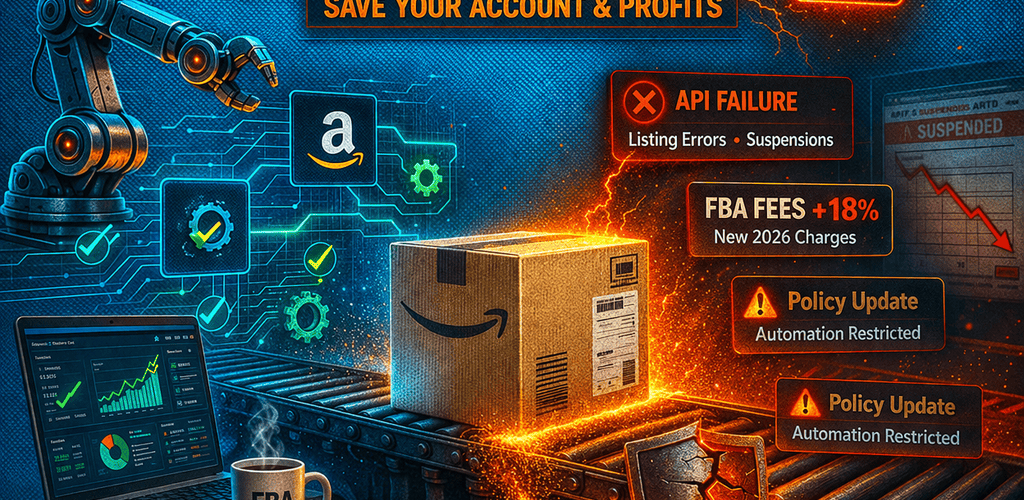
Amazon FBA automation has rapidly gained popularity as a “hands-free” way to build an online business. Across social media, YouTube ads, and agency landing pages, the promise is often the same: invest capital, let experts handle everything, and enjoy passive income while your Amazon store grows in the background.
At first glance, it sounds like the perfect opportunity especially for busy professionals, investors, or entrepreneurs who don’t have the time to manage daily operations. However, the reality behind Amazon FBA automation is far more complicated than the marketing suggests. While there are success stories, there are also countless cases of sellers losing money, facing account suspensions, or ending up with a business they don’t fully understand.
To make a smart decision, it’s important to look beyond the surface and understand the real risks involved. This article explores Amazon FBA automation in depth, focusing on the hidden dangers that every seller should be aware of before investing.
Understanding Amazon FBA Automation
Amazon FBA automation refers to a service model where a third-party agency manages your Amazon business on your behalf. This includes everything from product research and supplier sourcing to listing creation, advertising campaigns, inventory management, and customer service. Essentially, the agency runs the business while you act as the investor.
The appeal of this model lies in its simplicity. You don’t need prior experience with Amazon, you don’t have to spend time learning the platform, and you can theoretically earn income without being involved in daily operations. For many people, especially those looking for passive income streams, this sounds incredibly attractive.
However, this convenience comes at a cost—not just financially, but also in terms of control, risk exposure, and long-term sustainability.
The Illusion of Passive Income
One of the biggest misconceptions about Amazon FBA automation is the idea that it is completely passive. Agencies often market their services as “done-for-you” solutions, suggesting that once your store is set up, it will run smoothly with little to no involvement from you.
In reality, Amazon FBA is never truly passive. Even with an automation service in place, the business still requires oversight, strategic decisions, and ongoing evaluation. Market conditions change, competitors adjust their strategies, and Amazon frequently updates its policies. Ignoring these factors can quickly lead to declining performance or serious issues.
The truth is that automation reduces workload, but it does not eliminate responsibility. As the account owner, you remain accountable for everything that happens within your Amazon seller account.
Financial Risk and High Upfront Costs
One of the most immediate risks associated with Amazon FBA automation is the high initial investment. Most automation agencies charge significant upfront fees, often ranging from several thousand to tens of thousands of dollars. This fee typically covers the setup and initial management of your store, but it does not include inventory costs, advertising budgets, or Amazon fees.
When all expenses are combined, the total investment can easily exceed what many new sellers expect. What makes this particularly risky is the lack of guaranteed returns. Unlike traditional investments with predictable outcomes, Amazon FBA is highly variable and depends on multiple factors, including product demand, competition, pricing strategies, and advertising performance.
Many sellers enter this model expecting quick returns, only to find that profitability takes much longer than anticipated—or in some cases, never materializes at all.
Loss of Control Over Business Operations
Another major risk is the loss of control that comes with outsourcing your entire business. When you rely on an automation agency, you are essentially handing over critical decisions such as product selection, supplier negotiations, pricing strategies, and marketing campaigns.
While this may seem convenient, it creates a dependency that can be problematic. If the agency makes poor decisions, chooses the wrong products, or fails to adapt to market changes, your business performance will suffer. Yet, because you are not directly involved, you may not even realize what is going wrong until it’s too late.
This lack of control also limits your ability to build long-term expertise. Instead of learning how Amazon works and developing your own strategies, you remain dependent on the agency for every aspect of the business.
The Threat of Account Suspension
Perhaps the most serious risk in Amazon FBA automation is account suspension. Amazon has strict policies designed to protect customers and maintain marketplace integrity. Violations of these policies can result in warnings, listing removals, or permanent account suspension.
Some automation agencies, especially less reputable ones, may use aggressive or non-compliant tactics to achieve faster results. These can include listing restricted products, violating intellectual property rights, or engaging in manipulative review practices.
If such actions are taken on your account, Amazon will hold you responsible—not the agency. This can lead to severe consequences, including frozen funds, stranded inventory, and the loss of your entire business.
Recovering a suspended account is often a complex and uncertain process, and in many cases, sellers are unable to regain access at all.
Poor Product Selection and Market Saturation
Product selection is one of the most critical factors in Amazon FBA success. However, many automation agencies prioritize speed and short-term gains over careful market research and long-term strategy.
This often results in the selection of highly competitive or oversaturated products. Without proper differentiation, these products struggle to gain traction, leading to low sales and heavy reliance on paid advertising.
In some cases, agencies may choose trending products that initially show strong demand but quickly lose popularity. This creates a situation where inventory remains unsold, tying up capital and increasing storage costs.
A sustainable Amazon business requires thoughtful product selection, strong branding, and a clear value proposition—elements that are sometimes overlooked in automation models focused on rapid scaling.
Overestimated Profit Margins
Another common issue is the overestimation of profit margins. Many automation services promote high-profit potential, often highlighting impressive revenue figures. However, revenue does not equal profit.
Once all expenses are considered—including Amazon fees, advertising costs, storage fees, shipping, and agency commissions—the actual profit margins can be significantly lower than expected. In some cases, sellers may even operate at a loss despite generating consistent sales.
This disconnect between expectations and reality is one of the main reasons why many investors become disappointed with Amazon FBA automation.
Hidden Costs and Ongoing Expenses
In addition to the upfront investment, there are often ongoing costs that are not fully disclosed at the beginning. These may include monthly management fees, profit-sharing arrangements, additional advertising budgets, and continuous inventory restocking.
Over time, these expenses can accumulate and put pressure on cash flow. Sellers who are not prepared for these ongoing costs may find themselves needing to invest more money just to keep the business running.
This creates a situation where the business becomes more of a financial burden than a source of income.
Lack of Transparency and Communication
Transparency is crucial in any business partnership, yet it is often lacking in some automation services. Sellers may receive limited updates, unclear performance reports, or delayed responses to their questions.
Without clear visibility into key metrics such as sales performance, advertising efficiency, and profit margins, it becomes difficult to evaluate whether the business is actually performing well.
This lack of communication can lead to frustration and uncertainty, especially when results do not meet expectations.
Dependency and Long-Term Risk
Relying entirely on an automation agency creates a level of dependency that can be risky in the long term. If the agency underperforms, increases its fees, or ceases operations, you may be left with a business that you do not know how to manage.
This lack of independence can limit your ability to adapt and grow. Instead of building a scalable, self-sufficient business, you remain tied to the agency’s capabilities and decisions.
Legal and Compliance Challenges
Amazon FBA involves strict compliance with product regulations, safety standards, and intellectual property laws. Failing to meet these requirements can result in listing removals, fines, or legal action.
If your automation provider does not properly handle compliance, the consequences can be severe. As the account owner, you are legally responsible for the products you sell, regardless of who manages the operations.
Setting Realistic Expectations
One of the most important aspects of entering Amazon FBA automation is having realistic expectations. While it is possible to build a profitable business, it requires time, effort, and careful management.
Expecting immediate success or guaranteed returns can lead to poor decision-making and unnecessary risk. Instead, it is important to approach this model with a long-term mindset and a willingness to stay involved.
A Smarter Approach to Amazon FBA
Rather than relying entirely on automation, many successful sellers take a hybrid approach. They outsource specific tasks, such as PPC management or listing optimization, while maintaining control over core decisions like product selection and strategy.
This allows them to benefit from expert support while still developing their own knowledge and maintaining oversight of their business.
Building a strong brand, focusing on customer satisfaction, and continuously improving your listings are key factors that contribute to long-term success on Amazon.
Final Thoughts
Amazon FBA automation offers an appealing entry point into eCommerce, but it is not without significant risks. High upfront costs, lack of control, potential account suspension, and unrealistic expectations are just a few of the challenges that sellers may face.
Understanding these risks is essential before making any investment. By doing thorough research, setting realistic expectations, and staying actively involved in your business, you can reduce these risks and increase your chances of success.
Ultimately, Amazon FBA automation is not a shortcut to easy money. It is a business model that requires careful planning, informed decision-making, and ongoing attention. Those who approach it with the right mindset and strategy are far more likely to achieve sustainable results.