

Amazon auto campaigns are often the very first advertising strategy sellers use when they start running Sponsored Products on Amazon. The appeal is obvious: you don’t need keyword research, you don’t need advanced PPC knowledge, and Amazon promises to use its own data to show your ads to the “right” shoppers.
However, this simplicity is also the biggest trap.
Auto campaigns are responsible for more wasted ad spend than any other campaign type, not because they are bad, but because most sellers fundamentally misunderstand their purpose. When used incorrectly, auto campaigns quietly drain budgets, inflate ACoS, and hide real growth opportunities. When used correctly, they become one of the most powerful tools for discovering profitable keywords and scaling manual campaigns.
This article explains, in detail, the most common Amazon auto campaign mistakes sellers make and why these mistakes hurt performance over time.
Misunderstanding the True Role of Auto Campaigns
The biggest conceptual mistake sellers make is assuming that auto campaigns are designed to be long-term profit drivers. In reality, Amazon auto campaigns are data-collection engines, not precision sales machines. Amazon uses your listing content, category relevance, and historical performance to decide when and where to show your ads, but it does so broadly. This broad matching is intentional. Amazon is testing which search terms, products, and placements might work for your ASIN.
When sellers leave auto campaigns running indefinitely with high budgets, Amazon continues to experiment endlessly. That experimentation costs money. You end up paying for traffic that is loosely related to your product, traffic that may click but rarely converts. Over time, this leads to high spend with inconsistent sales, making sellers believe PPC itself is unprofitable, when in reality the structure is flawed.
Auto campaigns should act as the starting point of your PPC funnel, not the final destination. Their job is to reveal search terms and ASINs that you can later control more precisely in manual campaigns.
Letting All Auto Targeting Types Run Together
Amazon auto campaigns include four different targeting behaviors: close match, loose match, substitutes, and complements. Each of these behaves very differently. Close match usually targets search terms closely related to your listing keywords, while loose match expands into broader variations. Substitutes target competing products, and complements target products that are often purchased alongside yours.
When sellers place all of these targeting types into a single auto campaign, they lose visibility. Performance data becomes blended, making it impossible to understand what is actually working. High-performing close match traffic gets buried under poor-performing complement traffic, and sellers respond by either increasing bids blindly or turning off the campaign entirely.
This lack of segmentation leads to poor decision-making. Sellers either overspend on weak traffic or accidentally cut off profitable discovery sources. Over time, this prevents proper scaling and optimization.
Overbidding and Trusting Amazon’s Suggested Bids
Another costly mistake is relying too heavily on Amazon’s suggested bids. Amazon’s recommendations are designed to maximize auction competitiveness, not profitability. In competitive niches, suggested bids can be significantly higher than what is sustainable for your margins.
When high bids are applied to auto campaigns, Amazon aggressively pushes ads into premium placements. While impressions increase, the quality of traffic often decreases. Click costs rise faster than conversion rates, resulting in inflated ACoS and declining return on ad spend.
Auto campaigns should start with conservative bids, allowing Amazon to test traffic quality without burning budget. Once data confirms that certain targeting groups or search terms convert profitably, bids can then be increased strategically in manual campaigns where control is greater.
Ignoring Search Term Reports and Flying Blind
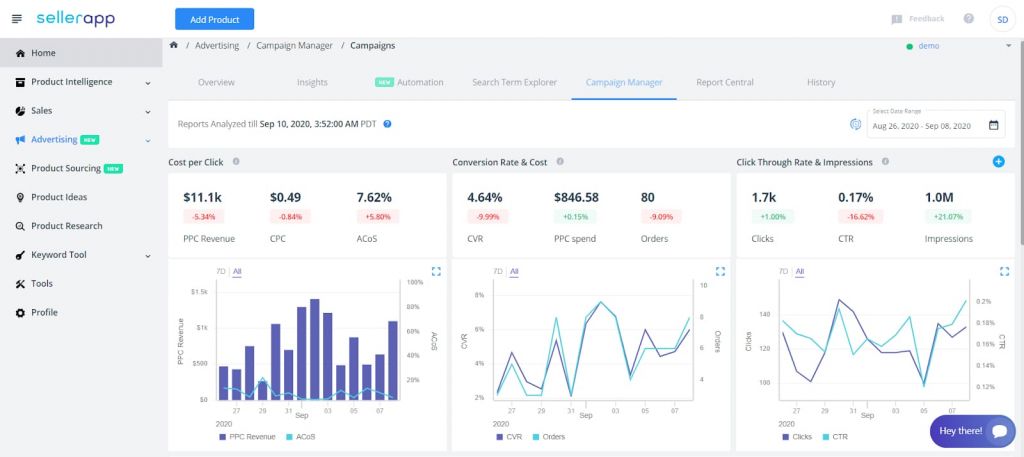
The search term report is the most valuable output of an auto campaign, yet it is also the most commonly ignored. Many sellers check only high-level metrics such as spend, sales, and ACoS, without looking at the actual customer search queries triggering their ads.
When search term reports are ignored, sellers miss critical insights. Profitable keywords remain trapped inside auto campaigns instead of being scaled in manual exact match campaigns. At the same time, irrelevant or unprofitable search terms continue to spend money unchecked.
This creates a situation where sellers are constantly paying Amazon to “rediscover” the same data over and over again. Proper PPC optimization requires regularly reviewing search term reports, extracting winners, and eliminating losers. Without this process, auto campaigns never mature and PPC performance stagnates.
Failing to Use Negative Keywords Properly
Negative keywords are one of the most powerful tools in Amazon PPC, yet they are frequently overlooked in auto campaigns. Without negatives, Amazon continues to show ads for irrelevant or low-intent searches, even after it becomes clear that these searches do not convert.
Over time, this lowers conversion rates and sends negative signals to Amazon’s algorithm about your product’s relevance. It also increases wasted spend, forcing sellers to raise budgets just to maintain the same sales volume.
Effective use of negative keywords allows sellers to shape Amazon’s targeting behavior. By blocking poor-performing search terms, sellers guide the algorithm toward higher-quality traffic. This is essential for turning auto campaigns from chaotic spenders into controlled discovery tools.
Running Auto Campaigns Without Manual Campaigns
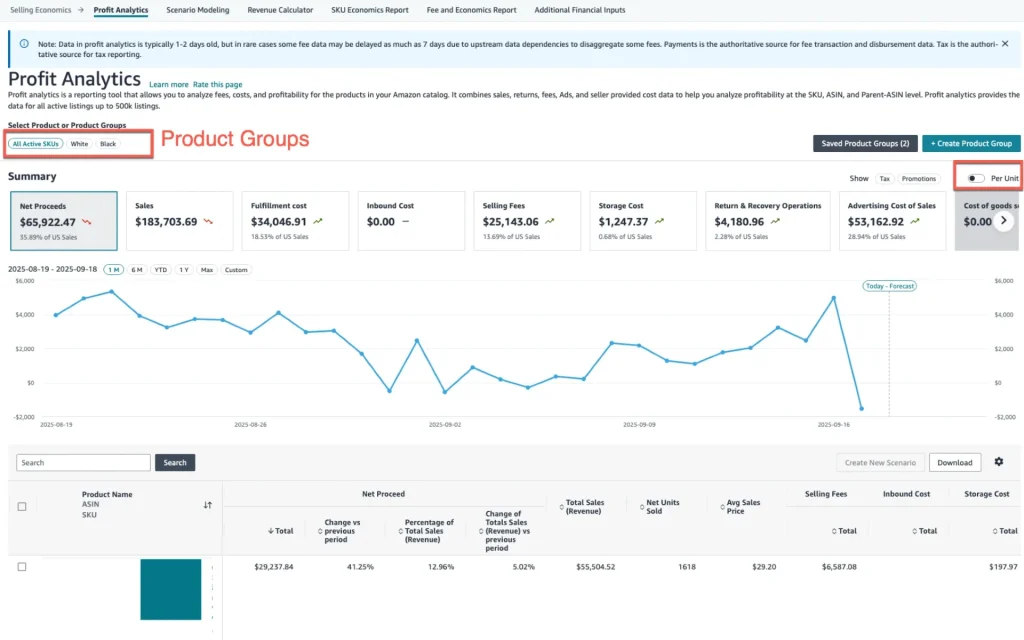
Some sellers rely entirely on auto campaigns, believing Amazon’s automation is enough. This is a critical strategic error. Auto campaigns do not allow precise keyword control, bid differentiation by match type, or effective brand defense.
Manual campaigns exist to take control of proven data. Once a keyword has demonstrated consistent sales, it should be isolated into a manual exact match campaign where bids, budgets, and placements can be optimized independently. Without manual campaigns, sellers give up control and limit scalability.
Auto campaigns should feed manual campaigns. Without that relationship, PPC becomes reactive rather than strategic.
Allowing Spend Without Performance Thresholds
Another common issue is the absence of clear rules for spend and performance. Many sellers allow keywords or targets to spend indefinitely without sales, simply because they have not defined a stopping point.
This is especially dangerous in auto campaigns, where Amazon continuously tests new variations. Without spend thresholds, small leaks add up to significant losses over time. Sellers often discover the problem only after hundreds or thousands of dollars have already been wasted.
Successful PPC management requires discipline. Sellers must define how much they are willing to spend before expecting a sale and act decisively when performance does not meet expectations.
Using Auto Campaigns for Brand Traffic
Brand searches typically convert at the highest rates and lowest costs. When brand traffic is left inside auto campaigns, it becomes mixed with non-branded traffic, distorting performance metrics. Sellers may believe an auto campaign is profitable when, in reality, profitability is driven mostly by brand searches.
This masks underlying inefficiencies and prevents proper optimization. Brand traffic should be isolated in manual exact match campaigns where it can be protected from competitors and maintained at minimal cost.
Neglecting Placement Performance
Auto campaigns do not perform equally across placements. Traffic from Top of Search behaves very differently from traffic on product detail pages. Sellers who ignore placement data miss opportunities to reduce wasted spend or increase exposure where conversion rates are higher.
Without analyzing placement performance, bid adjustments become generic and ineffective. Over time, this results in inefficient budget allocation and lower overall profitability.
Never Reducing Auto Campaign Dependence
As manual campaigns mature, auto campaigns should gradually play a smaller role. Many sellers fail to make this transition. They continue funding auto campaigns heavily even after profitable manual structures are in place.
This prevents scaling. Budget that could be driving predictable, profitable sales through exact match campaigns remains locked in exploratory traffic. Auto campaigns should always exist, but at controlled budgets, serving as ongoing research tools rather than primary revenue drivers.
Final Perspective
Amazon auto campaigns are neither good nor bad on their own. Their effectiveness depends entirely on how they are used. Sellers who treat them as “set and forget” solutions often struggle with high ACoS and inconsistent results. Sellers who treat them as structured discovery tools gain valuable data, reduce wasted spend, and scale faster through manual campaigns.
Understanding these mistakes Amazon Auto Campaign Mistakes: Why Most Sellers Lose Money Without Realizing Itand correcting them often marks the turning point between stagnant PPC performance and sustainable growth.
Leave A Comment