

Amazon is one of the most powerful sales platforms in the world, but it is also one of the strictest when it comes to compliance. Every seller, whether beginner or experienced, eventually faces the risk of a listing deactivation. When it happens, sales stop instantly, ads are paused, inventory may become stranded, and panic often sets in. However, a listing deactivation does not mean your business is over. In most cases, it simply means Amazon requires clarification, correction, and proof that you understand and will follow its policies going forward.
This article explains, in detail, what an Amazon listing deactivation really means, why it happens, how Amazon evaluates appeals, and how to write a strong appeal that actually gets approved.
What Amazon Listing Deactivation Really Means
A listing deactivation occurs when Amazon removes a specific ASIN from active sale due to a policy violation, compliance issue, or customer safety concern. Importantly, this action usually affects only the product, not your entire seller account. Your seller account can remain active while the affected listing is blocked from being sold.
This distinction matters because many sellers confuse listing deactivation with account suspension. A suspended account prevents you from selling anything at all, while a deactivated listing restricts only one product. Amazon treats listings as individual compliance units, meaning each product must independently meet all policy and regulatory requirements.
Why Amazon Deactivates Listings
Amazon’s goal is to protect customers, maintain marketplace trust, and reduce legal risk. Listings are deactivated when Amazon believes a product or its content violates one or more of these principles.
One of the most common causes is policy violations related to product claims. This frequently affects supplements, cosmetics, medical devices, and personal care products. Claims that imply diagnosis, treatment, cure, or prevention of diseases are strictly regulated. Even subtle wording, such as “relieves infection” or “clinically proven to cure,” can trigger automated systems or manual reviews that result in deactivation.
Another major reason is intellectual property complaints. These occur when a brand owner files a complaint stating that your listing infringes on a trademark, copyright, or patent. Even if the complaint is false or based on misunderstanding, Amazon often deactivates first and investigates later. Sellers must then prove authenticity, authorization, or remove infringing content.
Compliance documentation is also a frequent problem area. Certain categories require safety reports, test results, or certifications. If Amazon requests documents such as a Certificate of Analysis, safety data sheet, or lab test report and the seller fails to provide valid and current documents, the listing may be deactivated until compliance is confirmed.
Customer complaints can also lead to deactivation, especially when they involve safety concerns. Reports of allergic reactions, injuries, or product malfunction raise red flags. Amazon prioritizes customer safety over seller explanations, so even a small number of serious complaints can result in immediate action.
What Happens After a Listing Is Deactivated
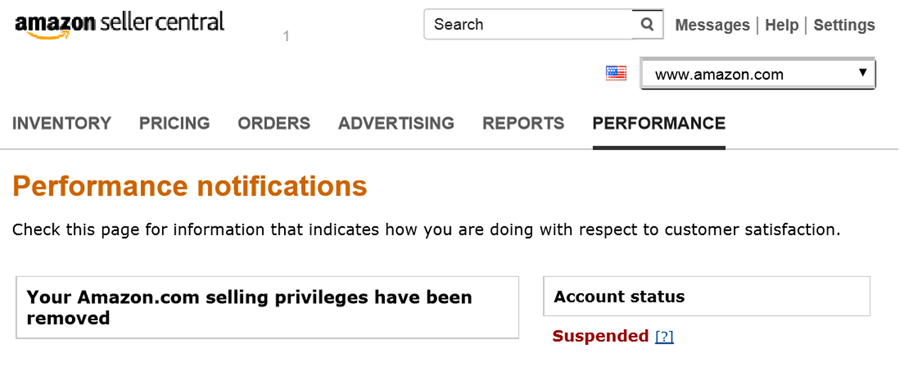
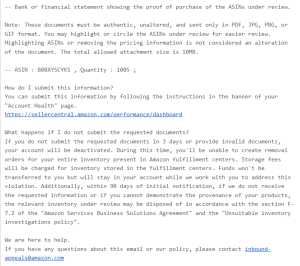
When Amazon deactivates a listing, the seller receives a Performance Notification inside Seller Central. This notification explains which policy was violated and whether Amazon requires corrective action or a formal appeal. The listing becomes unavailable for purchase, and any active advertising campaigns linked to that ASIN are automatically paused. If inventory is stored in Amazon fulfillment centers, it may become stranded, meaning it cannot be sold until the issue is resolved.
Some deactivations allow sellers to simply edit the listing to remove the problematic content and resubmit it for review. Others require a full appeal with a written explanation and corrective plan. Amazon clearly states which option applies in the notification.
Understanding the Amazon Appeal Process
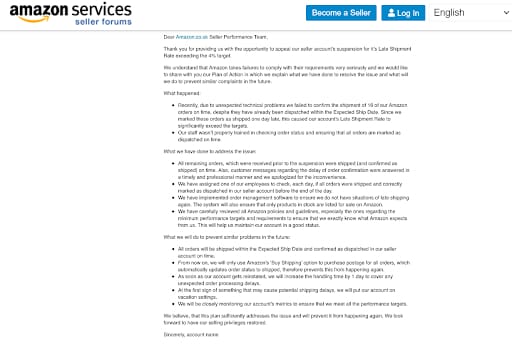
When an appeal is required, Amazon expects a structured and professional response. This response is known as a Plan of Action, often referred to as a POA. The purpose of the POA is not to argue with Amazon or defend yourself emotionally. Instead, it is to demonstrate that you understand what went wrong, that you have already corrected the issue, and that you have systems in place to prevent it from happening again.
Amazon reviewers are trained to assess appeals based on logic, compliance, and risk prevention. They are not persuaded by apologies, frustration, or explanations about financial losses. The appeal must focus entirely on operational improvements and policy adherence.
How Amazon Evaluates Appeals
Amazon reviews appeals using three core criteria. First, they assess whether the seller has correctly identified the root cause of the issue. This means clearly explaining why the violation occurred, not just restating Amazon’s policy. Second, they examine whether the seller has already taken effective corrective action. This includes editing listings, removing prohibited claims, submitting valid documents, or changing sourcing practices. Third, and most importantly, Amazon evaluates preventive measures. They want proof that the seller has implemented long-term controls to ensure the issue will never happen again.
Appeals that fail usually do so because they are vague, generic, or incomplete. Sellers often focus too much on fixing the immediate issue and not enough on demonstrating future compliance.
Writing a Strong Amazon Listing Deactivation Appeal
A successful appeal reads like a professional compliance report rather than a personal explanation. It clearly states what went wrong, what has been fixed, and how similar issues will be prevented.
The root cause section should be specific and honest. Instead of claiming ignorance of policy, which Amazon does not accept, sellers should explain the process failure that led to the violation. For example, the issue may have occurred because listing content was created without a final policy review or because supplier documentation was outdated.
The corrective action section must describe actions that are already completed. Amazon does not approve appeals based on promises. Sellers should explain exactly what changes were made to the listing, which claims were removed, what documents were submitted, and how compliance was verified.
The preventive measures section is the most critical part of the appeal. This section should explain new internal procedures, such as compliance checklists, content review workflows, staff training, or regular listing audits. Amazon needs to see that the seller has improved their business processes, not just fixed one listing.
Common Reasons Appeals Get Rejected
Many appeals are rejected because sellers use generic templates copied from forums or other sellers. Amazon can easily recognize copied content, and such appeals often fail to address the specific issue. Another common mistake is submitting an appeal without fully fixing the problem. If prohibited content still exists in the listing, Amazon will reject the appeal regardless of how well it is written.
Emotional language, blaming customers, or accusing Amazon of being unfair also lead to rejection. Amazon expects professionalism and accountability, not arguments.
How Long Amazon Takes to Respond
Response times vary depending on the category and severity of the issue. Simple content-related cases may be reviewed within 24 to 72 hours. Compliance and safety-related appeals can take several days or longer. If an appeal is rejected, sellers can submit another one, but it must be improved and address the reasons for rejection. Repeatedly submitting the same appeal without changes reduces the likelihood of reinstatement.
Preventing Future Listing Deactivations
The best way to deal with listing deactivation is to prevent it altogether. Sellers who regularly audit their listings, avoid risky claims, maintain updated compliance documents, and monitor customer feedback are far less likely to face deactivations. Training virtual assistants and content writers on Amazon policies is also essential, as many violations occur due to outsourced work without proper oversight.
Final Thoughts
An Amazon listing deactivation is a serious business interruption, but it is rarely permanent. Sellers who approach the situation calmly, understand the real cause of the issue, and submit a detailed, professional appeal have a strong chance of reinstatement. Amazon does not expect perfection, but it does expect responsibility, transparency, and long-term compliance.
Leave A Comment