

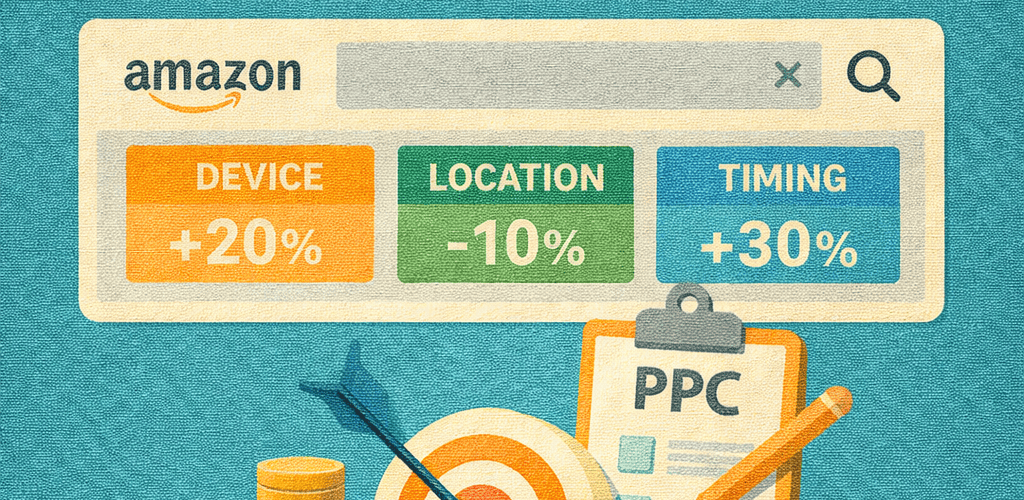
Amazon PPC success is rarely determined by keywords alone. While keyword research is important, the real driver of long-term profitability is how well bids are managed over time. Sellers who struggle with high ACOS, inconsistent performance, or sudden drops in visibility often face the same issue: they do not follow a structured Amazon PPC bid adjustment framework. Instead, bids are increased or decreased reactively, based on emotion or short-term fluctuations, rather than data-backed logic.
A bid adjustment framework provides clarity. It tells you when to increase bids, when to decrease them, and when to leave them untouched. More importantly, it helps you scale winning keywords without destroying profitability. In this guide, we will walk through a complete Amazon PPC bid adjustment framework that you can apply consistently across your account to achieve predictable, profitable growth.
Understanding the Role of Bids in Amazon PPC Performance
In Amazon’s auction-based advertising system, bids determine how often your ads appear, where they appear, and how much you pay for each click. A bid that is too low may prevent your ads from showing, even for high-intent keywords. A bid that is too high may generate traffic, but at a cost that erodes profit. The balance between visibility and efficiency is controlled almost entirely by bid management.
Unlike fixed pricing models, Amazon PPC bids operate in a dynamic environment. Competitors adjust their bids daily, seasonal demand fluctuates, and conversion rates change as reviews and listings evolve. Because of this, bid optimization cannot be a one-time task. It must be an ongoing process guided by a repeatable framework rather than guesswork.
Defining Campaign Objectives Before Adjusting Bids
Before making any bid changes, it is critical to understand the purpose of each campaign. Not all campaigns are meant to be profitable in the same way or at the same time. Some campaigns exist to defend brand terms, others to scale proven keywords, and others to discover new search terms. Adjusting bids without acknowledging these differences often leads to poor decisions.
For example, a branded campaign should focus on efficiency and defense, keeping ACOS as low as possible. A keyword research campaign, on the other hand, may tolerate higher ACOS temporarily in exchange for valuable data. A scaling campaign built around exact-match keywords should prioritize volume while maintaining profitability. When bids are adjusted in alignment with campaign intent, performance becomes more predictable and easier to control.
Establishing Break-Even and Target ACOS Benchmarks
A bid adjustment framework must be grounded in numbers. Two of the most important metrics for bid decisions are break-even ACOS and target ACOS. Break-even ACOS represents the point at which ad spend equals profit, meaning you are neither gaining nor losing money. Target ACOS is the level at which you aim to remain profitable while still growing.
Once these benchmarks are clearly defined, every bid decision becomes simpler. If a keyword is consistently below your target ACOS, it is a candidate for scaling. If it is above break-even, it requires cost control or elimination. Without these reference points, sellers often increase bids blindly or pause keywords prematurely.
Waiting for Meaningful Data Before Making Bid Changes
One of the most common mistakes in Amazon PPC is adjusting bids too early. New keywords often need time to gather enough clicks and impressions to produce reliable data. Making changes after only a few clicks can lead to false conclusions and lost opportunities.
A strong bid adjustment framework respects data thresholds. Keywords should be evaluated only after they have generated enough clicks to indicate performance trends. This patience allows you to distinguish between temporary fluctuations and true inefficiencies. By waiting for meaningful data, you reduce unnecessary bid volatility and improve overall account stability.
Adjusting Bids for Profitable Keywords
When a keyword consistently delivers sales at an ACOS below your target, it has proven its value. These keywords represent your strongest growth opportunities. Increasing bids on such keywords allows you to capture more impressions, win more auctions, and generate additional profitable sales.
However, bid increases should always be controlled. Gradual increases help maintain CPC stability and prevent sudden spikes in costs. The goal is to scale profitably, not to dominate visibility at any cost. A disciplined approach to increasing bids ensures that profitable keywords remain sustainable as volume grows.
Optimizing Keywords That Hover Around Break-Even
Keywords performing near break-even are not failures; they are optimization candidates. Often, these keywords convert well but suffer from slightly inflated CPCs. Instead of pausing them, a small bid reduction can bring ACOS into a profitable range.
This stage of the framework requires restraint. Overreacting to break-even performance often leads sellers to eliminate keywords that could become profitable with minor adjustments. By fine-tuning bids and improving listing conversion rates, many of these keywords eventually turn into consistent performers.
Managing High-ACOS Keywords That Still Convert
Not all high-ACOS keywords should be paused immediately. Some keywords generate sales but at a cost that exceeds your target. In many cases, the issue is not relevance but overbidding. Reducing bids gradually allows CPC to normalize while preserving conversion potential.
This part of the framework emphasizes optimization over elimination. By lowering bids strategically, you give these keywords a chance to stabilize. Only when performance fails to improve after bid reductions should pausing be considered.
Eliminating Keywords That Waste Ad Spend
Keywords that generate significant spend without producing sales represent a clear risk to profitability. A structured framework ensures these keywords are handled decisively. Once a keyword reaches a defined spend threshold without conversions, it should be reduced aggressively or paused entirely.
This discipline prevents wasted ad spend from accumulating over time. It also improves the efficiency of the campaign by reallocating budget toward higher-performing terms. Consistently removing non-converting keywords is one of the fastest ways to improve overall ACOS.
Considering Match Types in Bid Decisions
Match types play a crucial role in bid behavior. Exact-match keywords typically represent the highest purchase intent and deserve the most aggressive yet controlled bids. Phrase-match keywords serve as a balance between discovery and conversion, while broad-match keywords are primarily used for data collection.
A bid adjustment framework treats each match type differently. Applying the same bid logic across all match types often leads to inefficiencies. By aligning bid aggressiveness with search intent, sellers can maintain better control over traffic quality and costs.
Using Placement Data to Refine Bid Adjustments
Amazon’s placement reports provide valuable insights into where conversions occur. Some keywords perform exceptionally well at the top of search, while others convert better on product detail pages. Adjusting bids without considering placement performance can inflate costs unnecessarily.
A mature bid framework uses placement data to enhance efficiency. Bid increases are applied selectively to placements that generate profitable sales, while underperforming placements remain controlled. This layered approach to bidding helps maximize return on ad spend.
Maintaining Consistency in Bid Optimization
Consistency is a defining characteristic of successful PPC management. Making frequent, drastic bid changes introduces instability and makes performance difficult to analyze. A structured optimization schedule allows changes to compound gradually and predictably.
By reviewing performance regularly but adjusting bids methodically, sellers gain better control over trends and outcomes. Consistency ensures that improvements are sustainable rather than short-lived.
Scaling Amazon PPC Using a Structured Framework
Once a bid adjustment framework is in place, scaling becomes a controlled process rather than a risk. Profitable keywords are expanded carefully, budgets are increased strategically, and inefficiencies are addressed before they escalate. This approach allows sellers to grow ad spend without sacrificing profitability.
Scaling without a framework often results in rising ACOS and unpredictable results. Scaling with a framework leads to stable growth and stronger market positioning.
Final Thoughts
Amazon PPC bid optimization is not about constant tweaking or chasing impressions. It is about making informed decisions based on data, intent, and clear objectives. A well-defined Amazon PPC bid adjustment framework replaces guesswork with strategy and transforms PPC from a cost center into a growth engine.
By applying this framework consistently, sellers can reduce wasted spend, improve profitability, and scale their Amazon businesses with confidence. For more advanced Amazon FBA and PPC strategies, continue exploring in-depth guides on moizit.com, where data-driven decision-making takes center stage.
Leave A Comment