

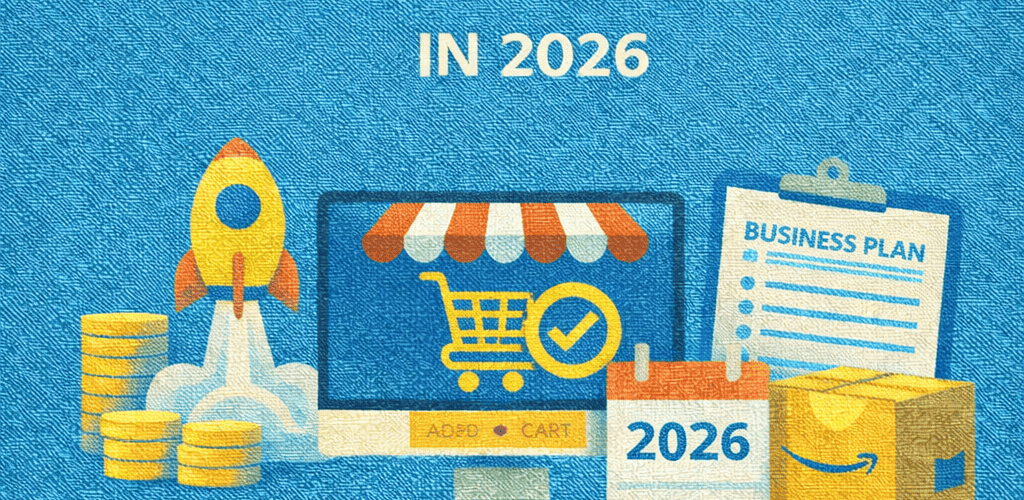
If you are thinking about starting an Amazon business in 2026, you are entering a very different marketplace than the one people saw in YouTube success stories from years ago. Back then, sellers could launch simple products, run a few ads, and quickly make sales. Today, Amazon is a highly competitive, algorithm-driven platform where success requires planning, branding, compliance, and proper execution.
That does not mean the opportunity is gone. In fact, Amazon is still one of the largest and most powerful e-commerce platforms in the world. Millions of customers search for products every day, and new sellers continue to build profitable businesses. The difference is that Amazon now rewards sellers who treat it like a real company, not a side hustle or a shortcut to fast money.
This guide is written specifically for beginners who want to start an Amazon business in 2026 and do it the right way. You will learn which models still work, what mistakes to avoid, and how successful sellers are building sustainable income on the platform.
Understanding How Amazon Has Changed
In 2026, Amazon is more strict, more automated, and more competitive than ever before. The algorithm focuses heavily on customer satisfaction, conversion rate, delivery speed, review quality, and account health. Listings that do not meet these standards struggle to rank, even if the product itself is good.
Amazon also enforces policies much more aggressively. Safety documents, trademark protection, listing compliance, and performance metrics are now critical. Many beginners fail not because their product is bad, but because they ignore these operational and compliance requirements.
At the same time, advertising costs have increased, and competition is more professional. You are no longer competing only with small sellers. You are competing with brands, agencies, and even large companies that run Amazon like a full-scale business operation.
Choosing the Right Business Model as a Beginner
One of the most important decisions you will make is choosing the right Amazon business model. In 2026, not every model is suitable for beginners.
Private Label for Long-Term Brand Builders
Private label means creating your own brand, sourcing products from manufacturers, and selling them under your brand name. This model still offers the highest long-term profit potential, but it also requires the most planning and investment.
For beginners, private label works best when approached with patience and proper research. You must understand product validation, supplier selection, quality control, branding, and listing optimization. Those who rush into private label without understanding these steps often lose money. Those who take time to learn and build properly can create a real asset that grows over time.
Wholesale for Faster Entry and Learning
Wholesale involves buying established brands in bulk from distributors and reselling them on Amazon. This model is popular among beginners because it is easier to start and does not require product development.
Wholesale allows you to learn how Amazon works, how Buy Box competition functions, and how FBA logistics operate. While profit margins are usually lower than private label, the risk is also lower, and the learning curve is smoother.
Why Dropshipping Is Risky in 2026
Many beginners are attracted to dropshipping because it appears cheap and easy. However, Amazon’s strict policies and customer expectations make this model very risky. Late shipments, supplier mistakes, and policy violations can quickly lead to account suspension. For beginners, dropshipping is no longer a safe long-term option.
Digital Products as a Low-Cost Alternative
Selling Kindle books, planners, or educational content is another beginner-friendly option. It requires creativity and marketing rather than logistics and inventory. While income may grow slower, the risk and startup cost are much lower.
The Importance of Proper Product Research
Product research is the foundation of your entire business. In 2026, guessing no longer works. Beginners must rely on data such as search volume, competition level, pricing history, review count, and demand stability.
A good product is one that solves a real problem, has consistent demand, reasonable competition, and enough margin after all Amazon fees and advertising costs. Many beginners fail because they choose products only based on popularity, without analyzing profitability or competition.
Building a Listing That Converts
Your product listing is your online salesperson. In 2026, Amazon heavily rewards listings that convert visitors into buyers.
A high-performing listing includes a clear, keyword-optimized title, benefit-driven bullet points, persuasive descriptions, professional images, and well-designed A+ content. Customers must instantly understand what your product does, why it is better, and why they should trust your brand.
Beginners often focus only on ranking, but conversion is even more important. A product that converts well will naturally rank higher because Amazon wants to show customers listings that generate sales and satisfaction.
Understanding Amazon FBA and Inventory Management
Fulfillment by Amazon is still the best choice for beginners because it gives access to Prime shipping and Amazon’s logistics network. However, inventory planning has become more complex.
Running out of stock can destroy your ranking, while sending too much inventory can increase storage fees and lock up your cash. Beginners must learn basic demand forecasting, restocking cycles, and cash flow planning from the start.
Learning Amazon PPC from Day One
Advertising is no longer optional. In 2026, even the best products need PPC to gain visibility and collect data. Beginners should start with simple automatic and manual campaigns, analyze search terms, and gradually build structured campaigns.
The goal is not only to generate sales but also to understand which keywords convert, which are expensive, and which drive profitable traffic. Over time, PPC becomes a powerful growth tool rather than a cost.
Avoiding the Most Common Beginner Mistakes
Many new sellers fail because they underestimate how serious Amazon has become. Some common mistakes include launching without proper research, using poor-quality images, ignoring compliance, underestimating advertising costs, and expecting fast results.
Success in 2026 requires patience, testing, optimization, and reinvestment. Amazon is a long-term game, not a get-rich-quick scheme.
The Role of Compliance and Account Health
Amazon’s automated systems monitor performance, returns, customer complaints, and policy adherence. A single serious violation can suspend your listing or your entire account.
Beginners must learn the basics of product compliance, safety documentation, and intellectual property protection. This may seem complex, but it is essential for building a stable business.
Thinking Like a Business Owner, Not a Hustler
The biggest shift beginners must make is mindset. Amazon in 2026 rewards those who think like business owners. That means planning, budgeting, branding, customer service, data analysis, and long-term strategy.
Successful sellers build systems, not just listings. They create processes for sourcing, launching, advertising, inventory management, and customer support. Over time, these systems allow the business to scale.
Conclusion
Yes, starting an Amazon business in 2026 is still worth it, but only if you approach it with the right expectations and strategy. The platform is no longer easy, but it is still full of opportunity for those who are willing to learn, invest, and operate professionally.
For beginners, the smartest path is to start small, focus on learning, choose a suitable business model, and build strong fundamentals in product research, listing optimization, PPC, and compliance. With consistency and proper execution, Amazon can still become a powerful source of long-term income and business growth.